TheFarmersDigest
The Farmers Digest
Jul 30, 2025
Author
Chris Pigge

Editor
Miles Falk
Nitrogen Fixation: Nature's Free Fertilizer Factory
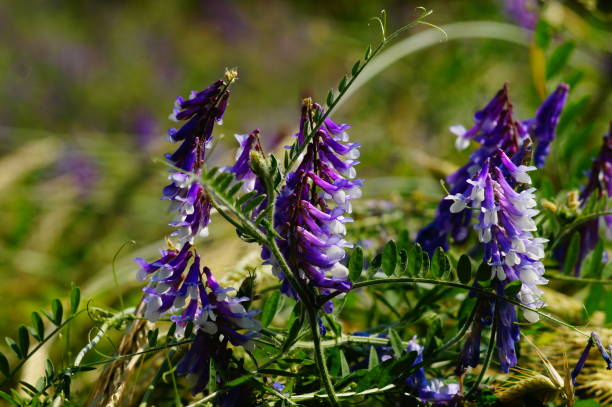
Hairy Vetch Legume
Every farmer knows nitrogen fertilizer costs money. Lots of money. But what if you could get nitrogen in your soil a different way? That's exactly what happens through nitrogen fixation, a natural process that's been feeding crops for millions of years before synthetic fertilizers ever existed.
Understanding nitrogen fixation can help farmers reduce fertilizer costs, improve soil health, and build more resilient cropping systems. The key lies in working with plants that have formed partnerships with bacteria to capture nitrogen directly from the air and convert it into plant food.
What Is Nitrogen Fixation and How Does It Work?
Nitrogen fixation is the process where atmospheric nitrogen gas (N₂) gets converted into ammonia (NH₃) or other nitrogen compounds that plants can actually use. The air around us is about 78% nitrogen, but plants can't use it in its gaseous form. It needs to be "fixed" into a usable form first.
This conversion happens naturally through partnerships between certain plants and specialized bacteria. Legume plants like clovers, vetches, and peas form symbiotic relationships with Rhizobium bacteria that live in small nodules on their roots. These nodules become nitrogen-producing factories where the bacteria use an enzyme called nitrogenase to break apart nitrogen gas molecules and combine them with hydrogen to create ammonia.
Think of it as a biological factory where plants and bacteria work together. The bacteria get a steady supply of sugars from the plant, and in return, they provide nitrogen directly to the plant's root system. This ammonia quickly converts to ammonium (NH₄⁺), which the plant can use immediately for growth. The process requires significant energy, which the plant supplies through sugars produced during photosynthesis.
While living, these plants release small amounts of nitrogen into the soil through their roots. But the major nitrogen boost comes when the plants die or get mowed down and left to decompose, and their nitrogen-rich biomass breaks down and releases much larger amounts of nitrogen that subsequent crops can use. When animals graze these nitrogen-rich legumes, they also help by returning nitrogen to the soil through their manure and urine, often in a form that's immediately available to other plants. This biological process provides a sustainable alternative to synthetic fertilizers while improving soil health.
Cover Crops: Your Nitrogen-Fixing Workforce
Cover crops represent the most practical way for farmers to harness nitrogen fixation. Legume cover crops like crimson clover, hairy vetch, field peas, and red clover can fix substantial amounts of nitrogen while providing other soil health benefits.
Legume cover crops typically contribute 50-200 pounds of nitrogen per acre, depending on species, growing conditions, and management. Crimson clover is particularly effective and can fix significant amounts of nitrogen when grown as a cover crop.
Research has found that hairy vetch can fix up to 100-150 lbs of nitrogen per acre, with 59-75% of its total nitrogen coming from atmospheric fixation rather than soil uptake. This represents substantial fertilizer value at today's nitrogen prices.
The timing matters significantly. Cover crops work best when grown to maturity before termination, as nitrogen content typically peaks during vegetative growth stages. Research shows that decomposition takes 2-4 weeks to release nitrogen for the next crop, so timing termination properly ensures nitrogen availability when cash crops need it most.
Synthetic Fertilizer vs. Natural Nitrogen Fixation
The economic comparison between synthetic nitrogen and biological fixation becomes compelling when you consider both direct costs and long-term benefits. Synthetic nitrogen fertilizer provides immediate availability but requires significant energy inputs for manufacturing and can contribute to soil acidification over time.
Biological nitrogen fixation through cover crops provides several advantages beyond just nitrogen supply. Research highlights that legume cover crops improve soil structure, increase organic matter, enhance water infiltration, and support beneficial soil microorganisms while providing nitrogen.
Research notes that nitrogen fixation rates can vary significantly based on environmental conditions, soil nitrogen levels, and cover crop management. In short growing seasons or mixed grass-legume stands, fixation may be lower than expected, making understanding local conditions important for realistic planning. Connect with farmers in your area who are already using cover crops to learn what works best in your region, or contact your local extension office for area-specific recommendations and research data.
Maximizing Nitrogen Fixation on Your Farm
Several management practices can help you get the most nitrogen from cover crops. Seed treatment represents one of the most important factors. Remember, legumes need specific bacteria to fix nitrogen. If you've been growing corn and soybeans for years without cover crops, your soil might not have the right bacteria for clover or other legume covers. Seed treatment is simply coating the seeds with these beneficial bacteria before planting. You can buy seeds that come already coated, or buy a powder inoculant to mix with your seeds right before planting. It's like giving the seeds the right partner they need to start making nitrogen. Without it, the cover crop might grow fine but won't fix much nitrogen.
Species selection affects how much nitrogen you get. Perennial legumes like alfalfa and clover can fix 75-200 pounds of nitrogen per acre annually, while annual legumes contribute less due to shorter growing seasons but still provide good value.
Mixing cover crops can balance nitrogen fixation with other benefits. Planting crimson clover with cereal rye gives you nitrogen from the clover plus better soil coverage from the rye, which helps prevent erosion, suppress weeds, and improve water infiltration compared to planting just one species.
Soil conditions significantly influence how much nitrogen gets fixed. Cover crops work best with adequate moisture, moderate temperatures, and low existing soil nitrogen levels. If your soil already has plenty of nitrogen, the plants won't work as hard to fix more from the air.
Practical Applications for Different Farming Systems
Nitrogen fixation strategies can adapt to various farming operations. Grain farmers can use legume cover crops in rotation to provide nitrogen for subsequent corn or other nitrogen-demanding crops. Many operations successfully use cover crops year after year to build nitrogen in their soil while reducing fertilizer needs.
If you're already rotating corn and soybeans, you're getting some nitrogen fixation since soybeans are legumes too. However, cover crops can provide additional benefits that soybeans alone don't offer. Your fields sit bare from harvest until planting, leaving soil vulnerable to erosion and losing the chance to build more nitrogen. Cover crops like crimson clover or hairy vetch can fix more nitrogen per acre than soybeans typically do, plus they protect and improve your soil during the off-season when nothing else is growing.
Vegetable operations often see dramatic responses to legume cover crops due to their intensive nitrogen requirements. The gradual nitrogen release from decomposing legume residues can reduce fertilizer needs while improving soil structure for better root development and water management.
Livestock operations can also benefit from nitrogen-fixing legumes in their soil. Not only do they make great feed stuff for cows but they also spread out nitrogen in livestock operations through animal manure.
Getting Started with Nitrogen Fixation
Begin by identifying opportunities in your current rotation where legume cover crops could fit. Fall-planted crimson clover after corn harvest provides nitrogen for spring-planted crops while protecting soil through winter. Spring-planted field peas can provide nitrogen for fall-planted crops in northern climates.
Soil testing helps determine baseline nitrogen levels and other factors that might affect fixation efficiency. High soil nitrogen can reduce fixation rates, while adequate phosphorus, potassium, and proper pH support optimal nodulation and plant growth.
Start small with proven species adapted to your region. Crimson clover works well in southern regions, while hairy vetch performs better in northern climates. Local extension services can provide specific recommendations for your area and cropping system.
Consider the economics carefully. Cover crop seed costs typically range from $20-60 per acre, but the nitrogen value alone often justifies this investment at current fertilizer prices. Add the soil health benefits, and the return on investment becomes even more attractive.
The Bigger Picture
Nitrogen fixation represents more than just fertilizer replacement. It's a fundamental biological process that can help build more sustainable and resilient farming systems. As synthetic fertilizer costs continue rising and environmental concerns about nitrogen pollution increase, understanding and utilizing biological nitrogen fixation becomes increasingly valuable.
The process requires patience and planning compared to simply applying synthetic fertilizer, but the long-term benefits extend far beyond nitrogen supply. Improved soil health, enhanced water infiltration, increased organic matter, and reduced input costs all contribute to farming systems that become more productive and sustainable over time.
Learning to work with nitrogen-fixing plants and their bacterial partners represents a return to fundamental agricultural principles that sustained farming for thousands of years before synthetic fertilizers existed. The difference today is that we understand the science behind these processes and can manage them more effectively for modern production systems.
Nitrogen fixation won't replace all synthetic fertilizer needs overnight, but it can significantly reduce fertilizer requirements while building soil health and farm profitability. For farmers willing to learn and adapt their management, nature's free fertilizer factory offers tremendous potential for more sustainable and profitable agriculture.
Want More?
Check out our articles on cover crops and roller crimping just to name a few.
References
NC State Extension. "Nitrogen Fixation."
New Mexico State University. "Nitrogen Fixation by Legumes."
Penn State Extension. "Growing Cover Crops for Nitrogen on Vegetable Farms."
University of Nebraska-Lincoln. "Is Nitrogen Fixation Oversold with Legume Cover Crops?"
Ecosphere. "A Grass–Legume Cover Crop Maintains Nitrogen Inputs and Nitrous Oxide Fluxes."
PLOS One. "Winter Cover Crops Increased Nitrogen Availability."